How to store paintings and art in Dubai humidity
Store paintings at a stable 40 to 60% relative humidity, away from outside walls, and keep every medium under 65%. In Dubai the danger is mostly indoors, in the gap between hot, wet outside air and a cold air-conditioned room.
Figures from CCI, Caring for paintings. They are examples of how quickly the risk tightens, and CCI treats 60% as the bare edge of possibility: a dip under 55% stops growth (CCI).
Why a cold room in a hot climate needs watching
Cool warm air and its relative humidity climbs. CCI puts the result plainly: damp appears “when warm humid air finds cool spots in a building” (CCI). Getty researchers working in hot, humid regions make a related point: the first step is keeping outside air out by sealing the building, and no climate system works well in a leaky one (Getty Conservation Institute).
This guide found no conservation source that gives a rule for loading doors or Dubai summers specifically. Our reading of that physics: ask how a store handles its doors in August, and how quickly a room recovers after one is opened.
What each medium wants
What are you storing?
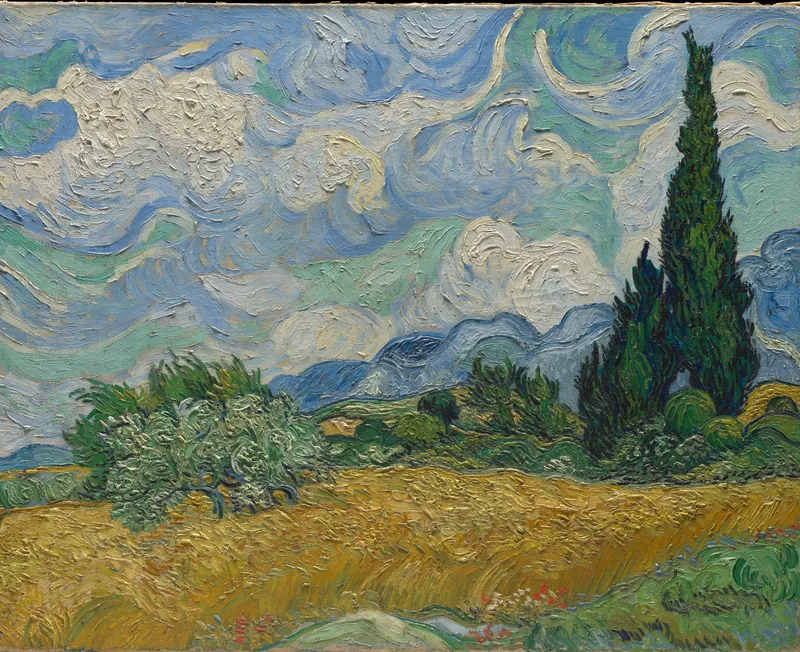
Wheat Field with Cypresses, 1889
Oil on canvas
The Metropolitan Museum of Art, New York, Open Access, public domain (CC0). Reproduced for its material, not held in any store named here.
Oil on canvas wants 40 to 60% RH and holds best near 50%.
The Canadian Conservation Institute gives 40 to 60% as the safest stable range, with 50% as the consensus centre (CCI Notes 10/4). The Bizot guidelines add 16 to 25°C (ICOM-CC and IIC). Above 75%, some canvases shrink while the stretcher expands. Mould tends to start on the back of the canvas near the stretcher bars (CCI).
| Provider | Humidity | Temperature |
|---|---|---|
| Vachi | ceiling inside, no floor stated | inside |
| Equinox | inside | inside |
| Brink's | inside | inside |
| Green Sky | partly outside | inside |
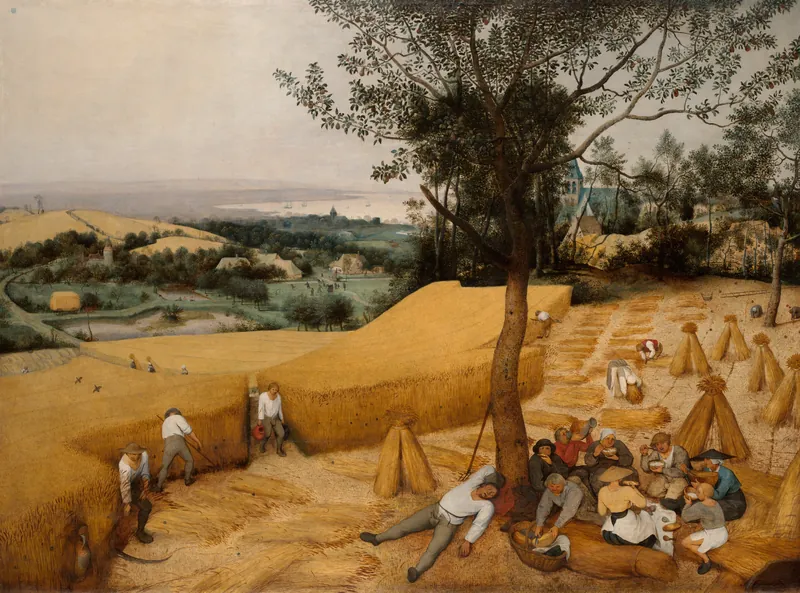
The Harvesters, 1565
Oil on oak
The Metropolitan Museum of Art, New York, Open Access, public domain (CC0). Reproduced for its material, not held in any store named here.
Panel shares the numbers with canvas and reacts harder when air turns dry.
CCI groups canvas and wood under the same 40 to 60% band. In dry air the unpainted back of a panel gives up moisture first, the wood warps, and paint can lift in ridges or tents (CCI Notes 10/4). A panel is the work to ask about most if a room publishes no humidity floor.
| Provider | Humidity | Temperature |
|---|---|---|
| Vachi | ceiling inside, no floor stated | inside |
| Equinox | inside | inside |
| Brink's | inside | inside |
| Green Sky | partly outside | inside |
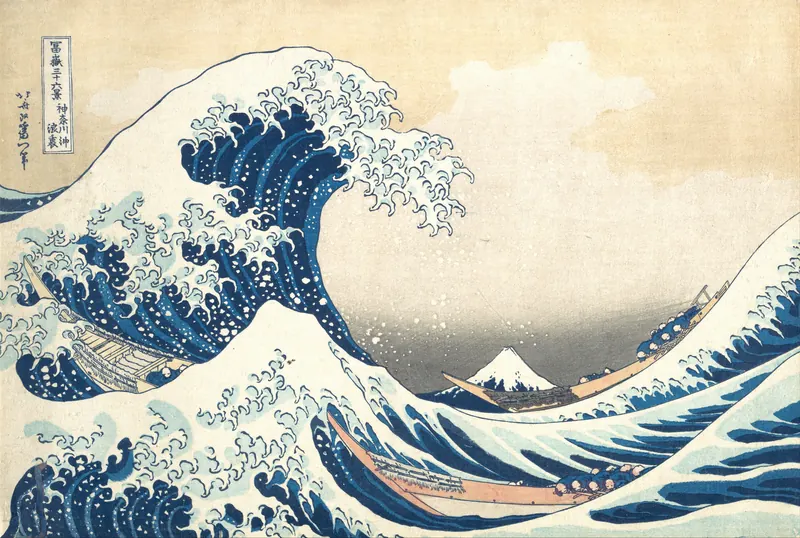
Under the Wave off Kanagawa, ca. 1830-32
Woodblock print; ink and color on paper
The Metropolitan Museum of Art, New York, Open Access, public domain (CC0). Reproduced for its material, not held in any store named here.
Paper tolerates a wider band and should stay clear of the mould line.
NEDCC lists 68°F ± 4 and 30 to 60% RH for combined use areas (NEDCC). CCI says to keep RH below 65% and avoid long periods above 75% (CCI). Very low humidity stiffens paper too, so drier is not automatically safer.
| Provider | Humidity | Temperature |
|---|---|---|
| Vachi | ceiling inside, no floor stated | partly outside |
| Equinox | inside | partly outside |
| Brink's | inside | inside |
| Green Sky | inside | partly outside |
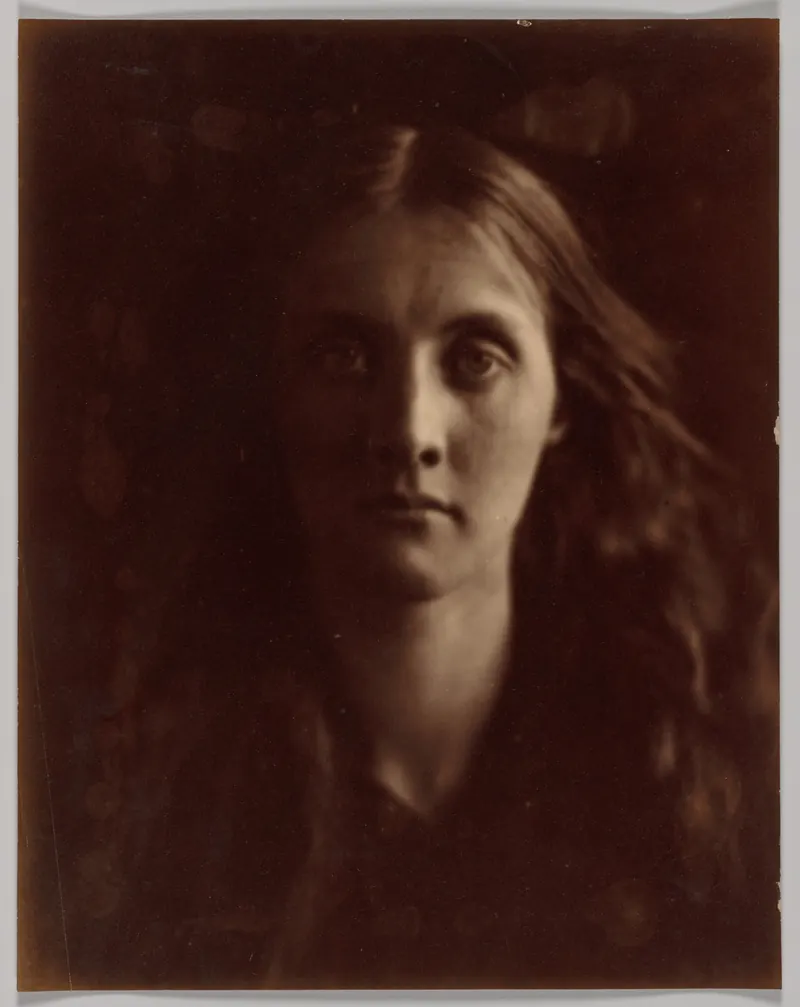
Julia Jackson, 1867
Albumen print from wet collodion negative
The Cleveland Museum of Art, Open Access, CC0. Reproduced for its material, not held in any store named here.
Photographs ask for drier and cooler air than any room here publishes in full.
The Library of Congress recommends 30 to 50% RH at 70°F or below, with daily swings ideally under 5% (Library of Congress). Colour photographs and film negatives are a separate case: it recommends 40°F or below, and none of the four published bands is a cold store. Below 20 to 30% RH, gelatin can turn brittle and crack (CCI).
| Provider | Humidity | Temperature |
|---|---|---|
| Vachi | ceiling above target, no floor stated | partly outside |
| Equinox | partly outside | partly outside |
| Brink's | partly outside | partly outside |
| Green Sky | inside | partly outside |
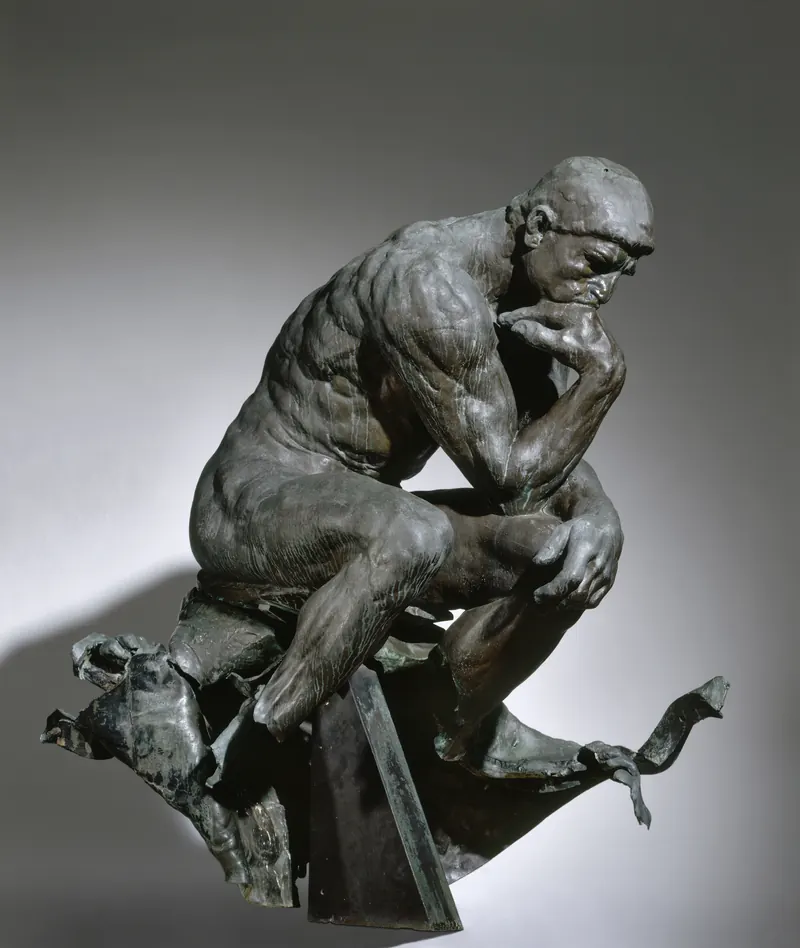
The Thinker, 1880-81
Bronze
The Cleveland Museum of Art, Open Access, CC0. Reproduced for its material, not held in any store named here.
Metal wants the narrowest humidity band on this chart.
CCI says most museum metals are stable at 45 to 50% RH, and that above 65% all metal corrosion speeds up (CCI). Every published band here is wider than 45 to 50%, so ask what the readings look like in the room you would rent, and what the provider suggests for sensitive metals.
| Provider | Humidity | Temperature |
|---|---|---|
| Vachi | ceiling above target, no floor stated | no medium figure |
| Equinox | partly outside | no medium figure |
| Brink's | partly outside | no medium figure |
| Green Sky | partly outside | no medium figure |
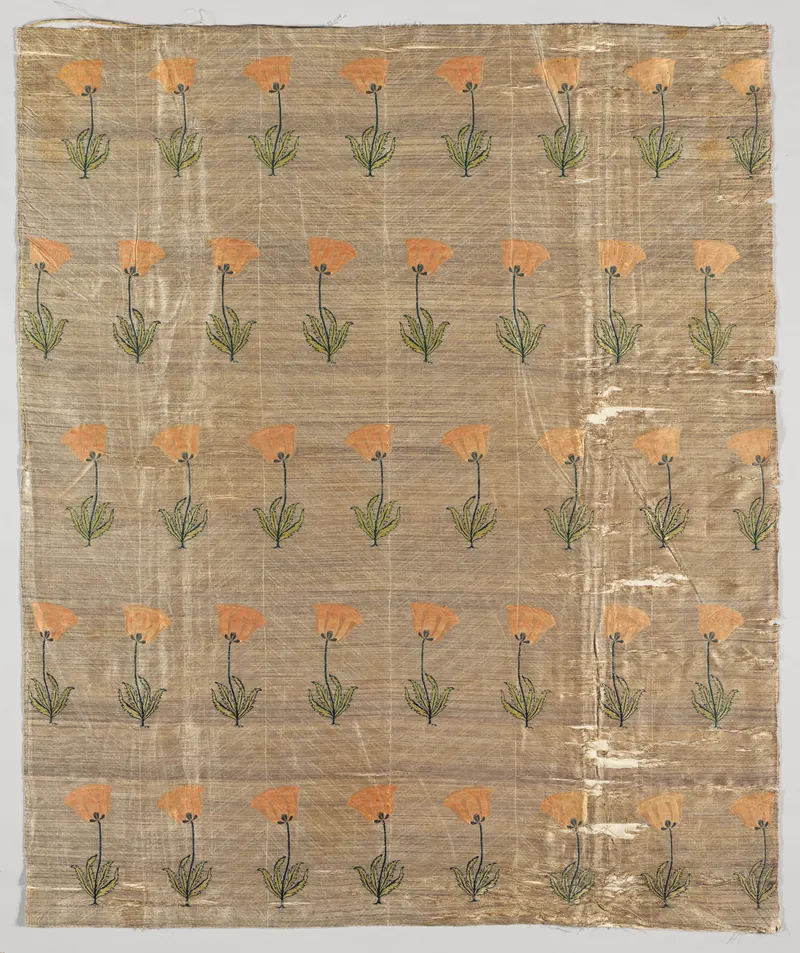
Silk and gilt-metal thread: twill weave with supplementary weft, stamped
The Cleveland Museum of Art, Open Access, CC0. Reproduced for its material, not held in any store named here.
Textiles forgive a wide range and fear the extremes.
CCI gives no single band: textiles tolerate a wide range and only extremes threaten them. Between 40% and 5% RH they become increasingly brittle (CCI), and the general mould line sits at 65%. The 40 to 65% bar on the chart is this guide's reading of those two limits, not a stated target.
| Provider | Humidity | Temperature |
|---|---|---|
| Vachi | ceiling inside, no floor stated | no medium figure |
| Equinox | inside | no medium figure |
| Brink's | inside | no medium figure |
| Green Sky | partly outside | no medium figure |
Stable matters, within limits
The old instinct was to chase a precise number. Conservation research has moved on. The American Institute for Conservation's wiki reports that many materials cope with humidity swings better than once assumed (AIC Conservation Wiki). CCI says the historic attention on temperature swings has been “out of all proportion” (CCI).
That is no licence to relax. The ICOM-CC and IIC declaration still sets a limit of ±10% RH in 24 hours inside its band, and says sensitive objects need tighter control. It also says targets should be achievable for the local climate, which is a useful question to put to any Dubai store: what can this building really hold?
Inside the room
- Keep off outside walls. CCI warns that perimeter walls can bring moisture and swings (CCI Notes 10/3).
- Look at the back. Mould usually starts at the back of a canvas near the stretcher bars, so a work can look fine from the front.
- Too dry also breaks things. Size, ground and paint contract at different rates and turn brittle. A band with no floor leaves this question open.
- Ask for readings. Published bands are targets. Logged numbers are evidence.
Rooms that publish a band
Equinox states 20 to 24°C and 40 to 60% RH. An Al Quoz operator, Vachi, prints 20 to 25°C and under 55% next to room prices, and is the only one of these you can book without a quote. The facilities table has the rest.